Introduction
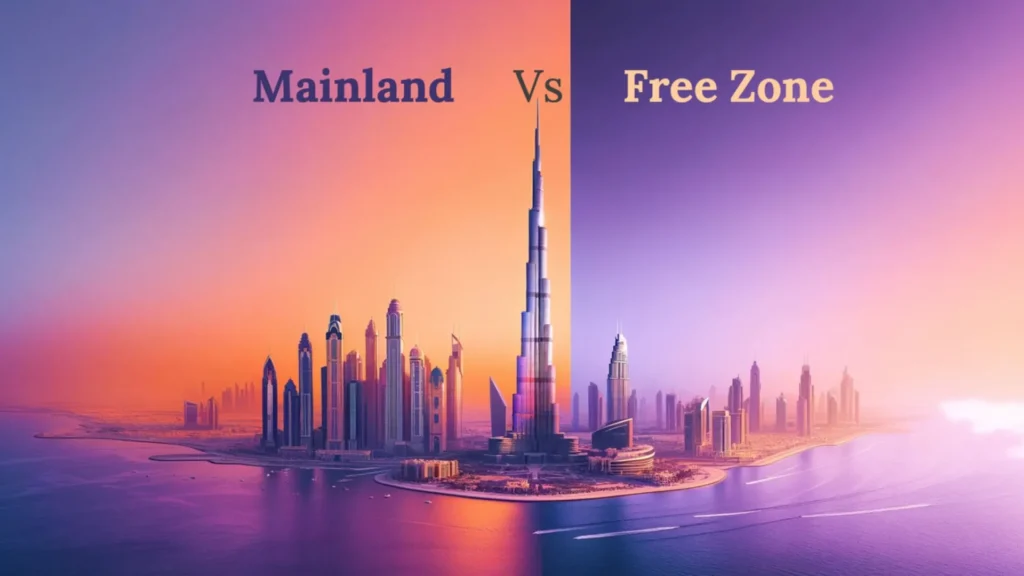
Entrepreneurs in the UAE often face a key decision: should they set up a mainland company or a free zone company? Each option offers unique benefits and limitations, depending on business goals, target markets, and compliance requirements.
Mainland Company
• Ownership: 100% foreign ownership now allowed in most activities.
• Market Access: Can trade directly in the UAE local market and bid for government contracts.
• Office Requirement: Physical office space is mandatory.
• Licensing Authority: Department of Economic Development (DED).
• Flexibility: Wider range of business activities compared to free zones.
Free Zone Company
• Ownership: 100% foreign ownership guaranteed.
• Market Access: Primarily for international trade; local UAE market access requires a distributor or mainland branch.
• Office Options: Flexi‑desk and virtual offices available.
• Licensing Authority: Specific free zone authority (e.g., DMCC, RAKEZ, Meydan).
• Benefits: Tax advantages, simplified setup, and sector‑focused zones (tech, media, logistics).
Key Differences
| Aspect |
Mainland Company |
Free Zone Company |
| Ownership |
100% foreign (most activities) |
100% foreign |
| Market Access |
Direct UAE market + govt contracts |
Limited, needs local agent/distributor |
| Office Requirement |
Mandatory physical office |
Flexi-desk/virtual options available |
| Licensing Authority |
DED (Dubai) or other emirate authorities |
Free zone authority |
| Activities |
Broad range |
Zone-specific focus |
Which Option is Right for You?
• Choose Mainland if you want to trade locally, expand widely, or work with government contracts.
• Choose Free Zone if you want cost‑effective setup, international trade focus, or sector‑specific benefits.
Conclusion
Both mainland and free zone companies in the UAE offer strong opportunities. The right choice depends on your business model, target market, and growth plans. With proper guidance, entrepreneurs can leverage either structure to succeed in the UAE’s dynamic economy.